
How to Practice Trading Without Risking Real Money
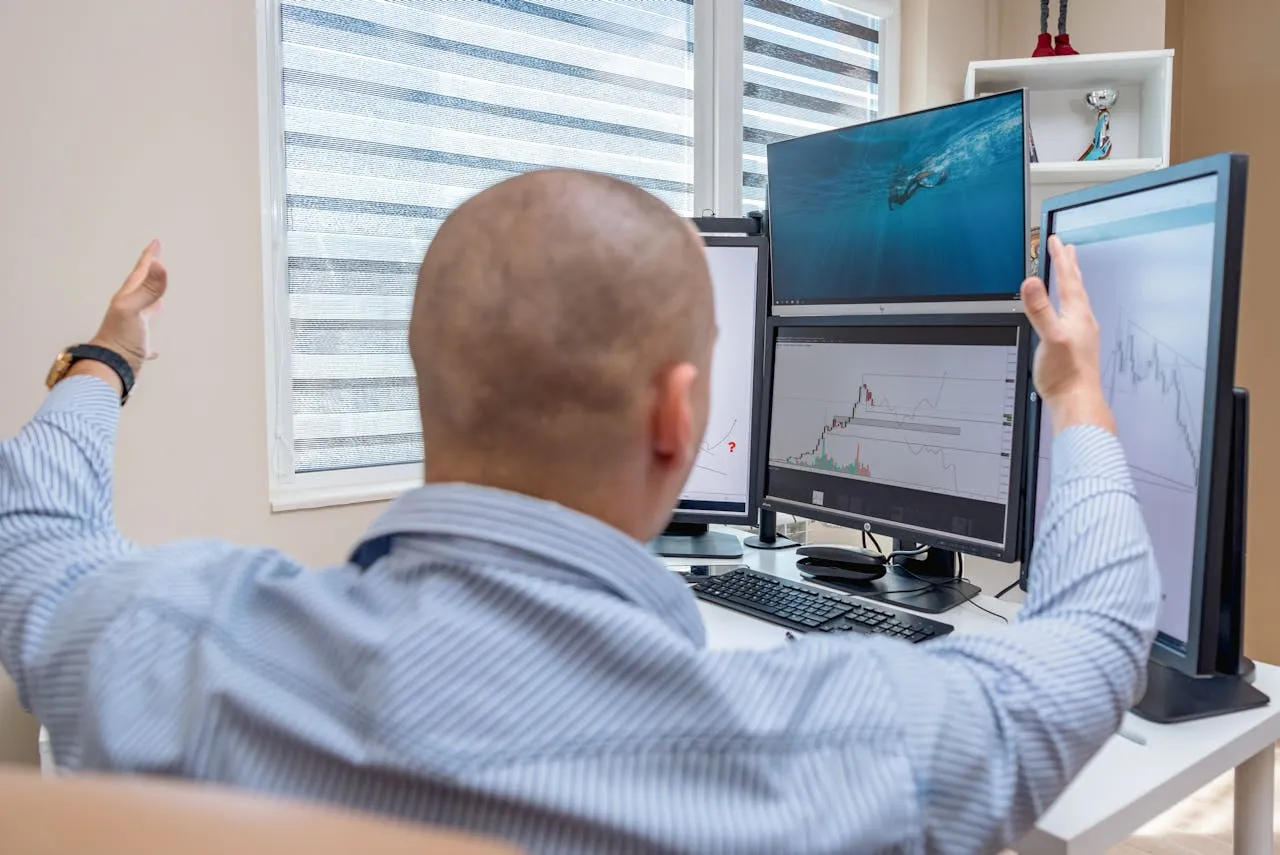
The best way to practice trading without risking real money is to use a paper trading account, also called a demo or simulated trading account. Most major brokers and platforms offer these for free with live market data. You place trades with virtual money in real market conditions, learning the mechanics of trading without any financial risk.
Best Free Paper Trading Platforms
TradingView Paper Trading. Built right into the TradingView charting platform. Click “Trading Panel” at the bottom, select “Paper Trading,” and you can place simulated trades on any market. Great for swing trading practice and learning chart analysis.
Thinkorswim paperMoney. TD Ameritrade’s (now Schwab) platform offers one of the most realistic simulators available. You get $100,000 in virtual cash, real-time data, and the full platform experience. Excellent for practicing stock and options trading.
NinjaTrader Sim. The go-to platform for futures traders. The simulation mode uses real-time market data and lets you practice with the same tools you’d use in live trading. Free to download and use in sim mode.
MetaTrader 4/5 Demo. The standard for forex practice. Most forex brokers provide free MT4/MT5 demo accounts with virtual funds. You get access to all currency pairs and the same execution environment as live accounts.
How to Make Paper Trading Actually Useful
Most beginners waste their paper trading time by treating it like a video game. Here’s how to make it count:
Trade realistic position sizes. If you plan to start with $2,000, set your simulator to $2,000, not $100,000. Trading with fake $100K teaches you nothing about managing a real small account.
Follow your rules. Use a written trading plan with specific entry, exit, and risk management criteria. Place stop losses on every trade. Risk only 1% per trade. Treat every simulated dollar as if it were real.
Keep a journal. Record every trade: why you entered, where your stop was, what happened, and what you learned. Review weekly. This single habit separates successful paper traders from those who learn nothing.
Trade during live market hours. Backtesting historical charts is useful, but nothing replaces the experience of making decisions in real time with live price action.
Beyond Paper Trading: Other Free Practice Methods
Backtesting lets you test strategies on historical data. TradingView’s replay feature lets you play back past market days bar by bar, making decisions as if you were there live.
Trading communities like Reddit’s r/daytrading, futures trading Discord servers, and broker-hosted webinars give you exposure to how other traders think and manage risk.
Market observation is underrated. Spend 30 minutes a day just watching price action without trading. Notice how support and resistance levels form, how volume spikes at key moments, and how news events move prices. This builds pattern recognition that no textbook can teach. Visit our education hub for structured observation exercises.
Key Takeaways
- Paper trading accounts from major brokers are free and use live market data
- Set your simulator to match your actual starting capital for realistic practice
- Keep a detailed trading journal during paper trading, just as you would live
- Backtesting and market observation complement simulator practice
- Treat paper trading seriously: follow your rules, use stop losses, and review your performance
Frequently Asked Questions
How long should I paper trade before going live? At least 30 to 60 days, or until you’ve completed 50 to 100 trades following a consistent strategy. If you’re profitable and following your rules, you’re ready to transition. See our paper trading vs real money guide for details.
Are paper trading results realistic? Mostly, but not perfectly. Simulated fills don’t account for real slippage or liquidity limitations. Your real results will likely be slightly worse at first, especially due to the emotional factor of trading real money.
Can paper trading teach me risk management? Yes, if you take it seriously. The mechanics of setting stop losses, calculating position sizes, and following risk rules are identical in simulation and live trading. The emotional discipline, however, only develops fully with real money.
Risk Disclaimer: Trading involves substantial risk of loss. Past performance is not indicative of future results. See our full risk disclaimer.