
Why Most Traders Fail: The Real Psychological Reasons
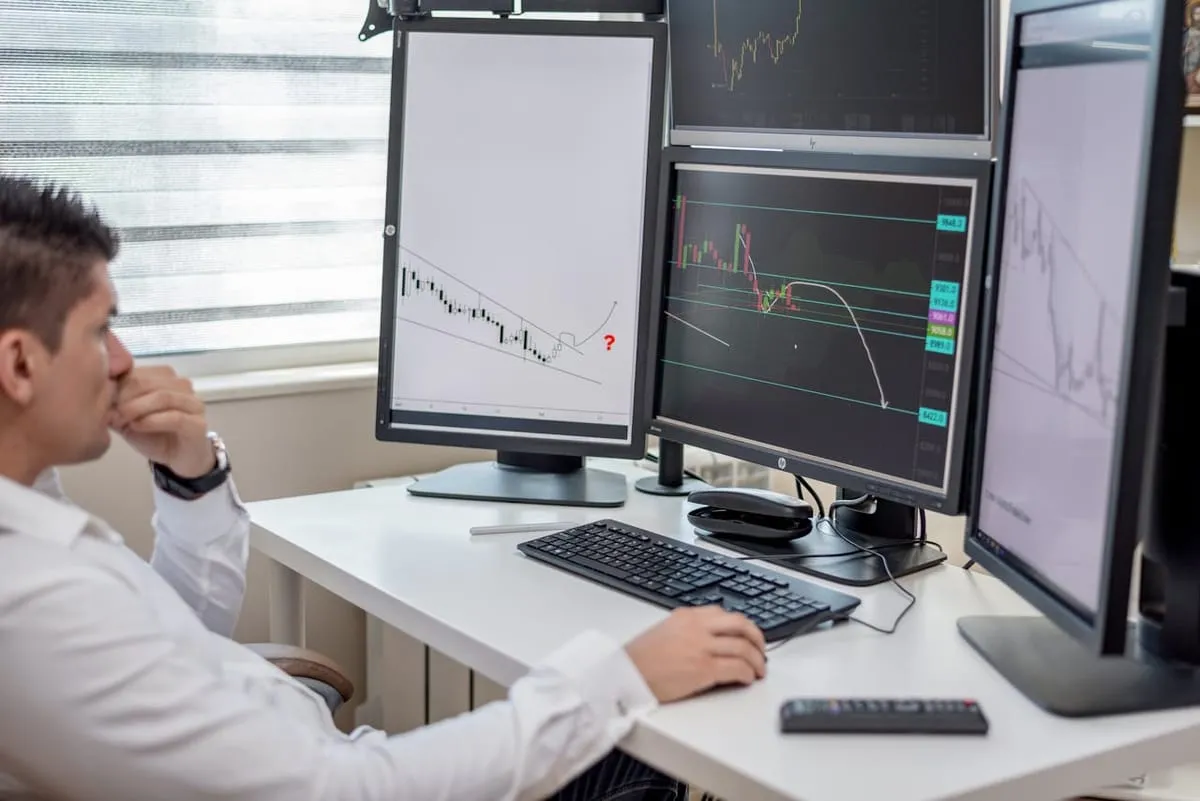
The often-cited statistic is that 70-80% of retail traders lose money. Some studies put it higher. Anyone who’s been in trading circles long enough has watched smart, motivated people blow account after account and eventually give up.
Why traders fail isn’t a mystery. The patterns are consistent, well-documented, and, this is the important part, largely preventable. But they require brutal honesty about what’s actually happening when you trade.
This isn’t going to be a feel-good post about mindset and journaling. It’s going to be direct about the real reasons, because that’s the only way to actually change anything.
Reason #1: No Genuine Edge
An edge in trading means your strategy, over a large sample of trades, produces more money than it loses. It’s positive expectancy.
Most beginners don’t have one. They have a collection of techniques they’ve seen on YouTube, support and resistance, RSI overbought/oversold, moving average crossovers, assembled into something that feels like a strategy.
Feeling like a strategy and being a strategy are not the same thing.
A real edge has been tested. You know:
- Win rate over 100+ trades
- Average winner vs. average loser (the expectancy formula: Win Rate × Avg Win − Loss Rate × Avg Loss)
- What market conditions it works in, and what conditions it doesn’t
Without this data, you’re trading on hope. And hope is not a method.
How to Fix It
You don’t need a complicated strategy. You need a simple, specific one that you understand completely and have tested honestly. Track every trade in a spreadsheet or journal. After 100 trades, run the numbers. If expectancy is negative, the strategy needs to change, not the position sizes.
Reason #2: Terrible Risk Management
This is probably the single biggest account killer among traders who do have a real edge.
A trader can have a 55% win rate and still blow their account if they risk 15% on some trades and 1% on others, skip stop losses when they’re “sure,” or double down on losing positions.
The math doesn’t care about your intuition. Risk management is the system that turns a positive-expectancy strategy into actual long-term profitability. Without it, even good trades produce unpredictable results.
The Specific Failures
- No stop losses: “I’ll watch it manually”, you won’t, and you’ll let a small loss become a large one
- Variable position sizing: risking 5% when confident and 1% when uncertain creates huge account volatility and emotional trading cycles
- No daily loss limits: continuing to trade after a bad day compounds losses and damages psychology for the following day
- Revenge trading: doubling up after losses to “get it back”, one of the fastest account-blowing behaviors in trading
Read our full guide on risk management for traders if you’re still piecing this together.
How to Fix It
Before you trade another dollar, write down:
- Max risk per trade (1% of account)
- Daily loss limit (2-3% of account)
- The rule: no stop loss = no trade
Follow these mechanically. No exceptions for “high-conviction” trades.
Reason #3: The Ego Problem
Trading attracts highly analytical, competitive people who are accustomed to being right. That’s a liability, not an asset.
In most fields, being smart and working hard produces better results. In trading, the market doesn’t reward you for effort or intelligence, it rewards you for being right about price direction at the right time, for the right size, with the right exit. Being the smartest person in the room means nothing.
The ego problem manifests in specific ways:
- Refusing to take a loss because it means admitting the trade was wrong
- Not cutting winners because you “know” the move will continue
- Overriding your system because you’ve convinced yourself you see something the system doesn’t
- Blaming external factors (news, manipulation, broker fills) instead of examining your own decisions
Every one of these behaviors is ego protecting itself from the discomfort of being wrong.
How to Fix It
Separate your identity from your trades. A bad trade is not evidence that you’re bad at trading, it’s data. Get comfortable with the phrase “I was wrong about this one.” The faster you can say it, the faster you cut losses and protect capital.
The best traders are genuinely indifferent to individual trade outcomes. They care about process and results over hundreds of trades, not whether today’s specific trade worked out.
Reason #4: Overconfidence After Early Wins
Many traders blow their first real account not because they started badly, but because they started well.
A streak of early wins creates a dangerous feedback loop. The wins feel like confirmation of skill. Position sizes grow. Rules get relaxed. “I’ve figured this out” becomes the internal narrative. Then the inevitable losing streak arrives, but now the position sizes are large, the discipline is loose, and the account takes a catastrophic hit.
Early wins in trading contain a significant luck component. The market rewards beginners sometimes, not because the beginner is skilled, but because any random approach will catch some favorable moves. The skill/luck ratio only becomes clear over hundreds of trades.
How to Fix It
Keep position sizes small for a minimum of 6 months, regardless of results. Add a rule: “I will not increase my standard position size until I have 6 months of positive performance at the current size.” This forces you to prove consistent performance before scaling.
Reason #5: Psychological Reactions to Loss
Loss is inherently uncomfortable. But for most people, loss is also psychologically destabilizing in ways that directly harm subsequent decisions.
After a loss:
- Attention narrows (you focus only on getting back the loss, not on valid setups)
- Risk tolerance distorts (either risk aversion, “I can’t take another loss”, or risk-seeking, “I need a big win to make it back”)
- Cognitive function declines (stress hormones impair prefrontal cortex function, literally harder to think clearly)
These aren’t personality flaws. They’re documented human psychological responses. The problem is that trading punishes these responses financially.
Specific Patterns
Overtrading after losses: taking low-quality setups because you’re focused on recovering, not on being selective. See our post on how to stop overtrading.
Revenge trading: emotionally-driven trades that are larger and less planned than normal. We cover this in depth in our revenge trading guide.
Analysis paralysis after losses: becoming so afraid of another loss that you miss valid setups, then overcompensate by forcing a trade later.
How to Fix It
The practical solution is mechanical rules that activate automatically during loss periods:
- After two consecutive losses: trade smaller for the rest of the session
- After hitting daily limit: close the platform and walk away
- After a bad week: take 1-2 days off before trading again
These rules remove the need for willpower when willpower is most depleted.
Reason #6: Treating Trading Like Gambling
For some traders, the act of being in a trade, the adrenaline, the uncertainty, the possibility of a fast gain, is the actual goal. The profit is almost secondary.
These traders overtrade. They trade in low-probability conditions. They hold through news events for the thrill of it. They get bored in flat markets and force trades. And they lose money systematically because their decision criterion is “how exciting does this look” rather than “does this fit my defined setup.”
If you’ve ever noticed yourself opening positions just to “be in something”, that’s gambling psychology applied to trading. It will cost you.
How to Fix It
Define exactly what qualifies as a valid trade. Write it down. If a potential trade doesn’t match every criterion on the list, you don’t take it. Period.
Add a rule: maximum trades per day (e.g., 3). When you’ve taken your three trades, win, lose, or draw, you’re done for the session. Artificial constraints force selectivity.
Reason #7: Unrealistic Expectations
“I want to turn $10,000 into $100,000 this year”, 10x in 12 months. This isn’t a goal; it’s a fantasy that drives dangerous behavior.
To hit 10x in a year, you need massive position sizes, which means massive risk. One bad streak at that risk level and the account is gone. Most professional traders are thrilled with 20-30% annual returns. Hedge funds that consistently deliver 30% are considered exceptional.
When beginners set 10x expectations, they size too large, feel frustrated when returns are “only” 10-15%, and start taking bigger risks to catch up to the imaginary target. The imaginary target kills the account.
How to Fix It
Set process goals, not return goals. “I will follow my risk management rules on every trade this month” is a goal you control. “I will make 50% this month” is not. Focus on being disciplined for 6 months, build a verified track record, then revisit what returns are realistic given your strategy and style.
What Traders Who Succeed Do Differently
Successful traders share a few common traits, not intelligence, not better strategies:
- Obsessive rule-following. Their pre-defined rules govern trade selection, sizing, and exits. They don’t deviate.
- Honest self-assessment. They review their trades without ego. They know exactly where they’re losing money and why.
- Patience. They wait for their setup. They’d rather miss a move than force a trade that doesn’t qualify.
- Appropriate position sizing. They risk small, consistently. They don’t need any single trade to be life-changing.
- Long-term perspective. A bad day is one data point. A bad week is a blip. They care about the 3-month, 6-month trend.
None of these require special talent. They require discipline and honesty, which are entirely learnable.
Conclusion
Most traders fail because of psychology and risk management, not because of strategy. The patterns are predictable: ego, lack of edge, bad risk habits, emotional reactions to loss, unrealistic expectations.
The good news is that understanding the pattern is half the battle. The other half is building systems, rules, limits, reviews, that work even when your psychology is working against you.
Explore our learning resources to build those systems methodically.
Key Takeaways
- Most traders fail because of psychology and risk management, not strategy; the patterns are predictable and preventable
- Having no genuine edge (positive expectancy over 100+ trades) is the foundational problem; a collection of YouTube techniques is not a strategy
- Overconfidence after early wins is one of the most dangerous phases because it leads to increased position sizes and relaxed rules right before the inevitable losing streak
- The fix for every major failure pattern is building mechanical rules that activate automatically: max risk per trade, daily loss limits, mandatory breaks, and no-stop-means-no-trade
- Successful traders share obsessive rule-following, honest self-assessment, patience, appropriate position sizing, and a long-term perspective
Frequently Asked Questions
What percentage of retail traders actually lose money?
Studies consistently show 70-80% of retail traders lose money, with some analyses putting the number higher. The primary causes are psychological (ego, revenge trading, loss aversion) and behavioral (no risk management, inconsistent sizing), not lack of intelligence or bad strategies.
How do I know if my trading strategy has a real edge?
Track at least 100 trades and calculate: (Win Rate x Average Win) minus (Loss Rate x Average Loss). If this number is positive, you have positive expectancy. If negative, the strategy needs to change before you risk more capital. Most beginners skip this step and trade on hope rather than data.
Why do traders blow accounts after winning streaks?
Early wins create overconfidence, leading to larger position sizes and relaxed rules. When the inevitable losing streak arrives, the larger positions amplify losses and the loose discipline provides no protection. The fix is a rule: do not increase position size until you have 6 months of profitability at the current size.
How do I stop revenge trading?
Build mechanical rules that activate automatically during loss periods: after two consecutive losses, trade smaller; after hitting your daily limit, close the platform and walk away; after a bad week, take 1-2 days off. These rules remove the need for willpower when willpower is most depleted.
Risk Disclaimer: Trading involves substantial risk of loss. Past performance is not indicative of future results. See our full risk disclaimer.