
What Is the S&P 500 and Why Do Traders Watch It?
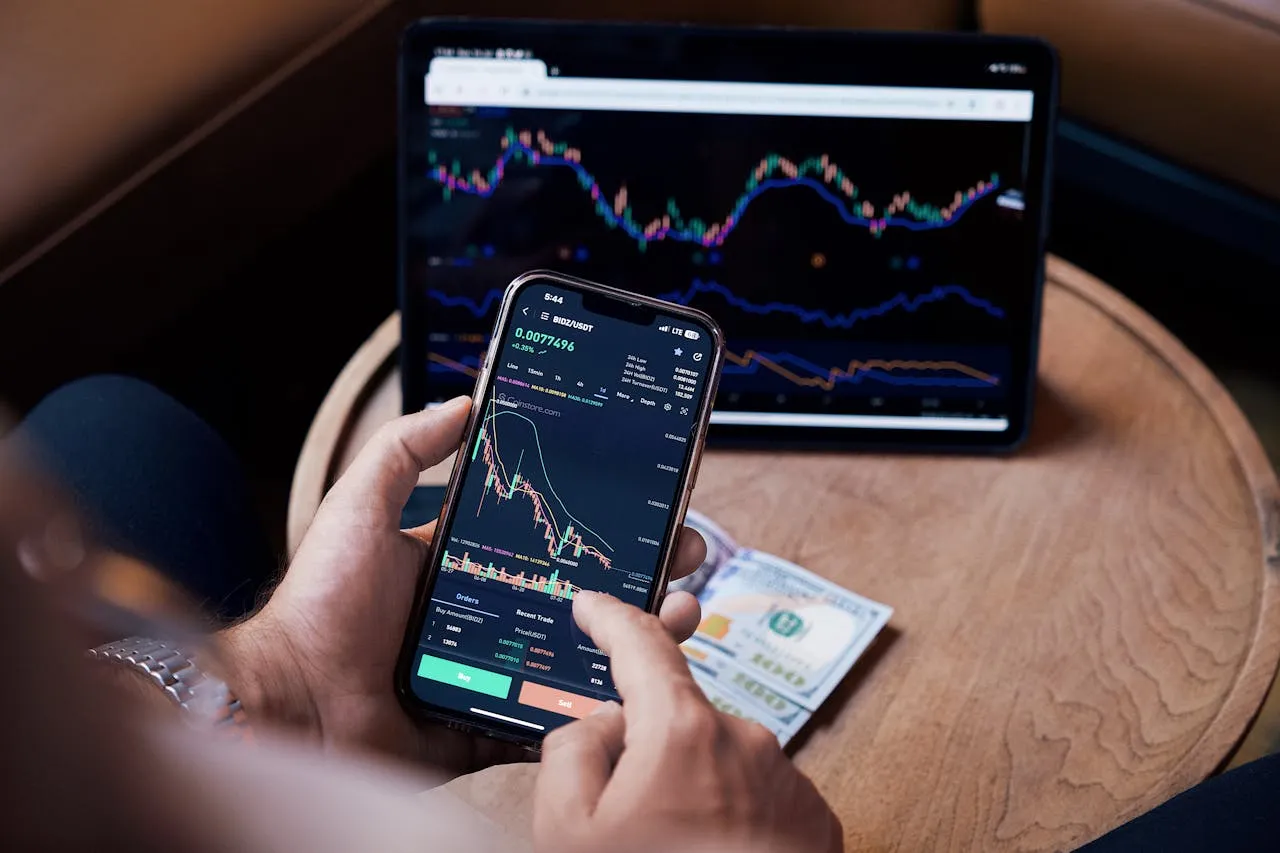
The S&P 500 is a stock market index that tracks the performance of 500 of the largest publicly traded companies in the United States. It includes household names like Apple, Microsoft, Amazon, and JPMorgan Chase. When people say “the market is up” or “the market is down,” they’re usually referring to the S&P 500. Traders watch it because it’s the single best barometer of overall US stock market health.
What the S&P 500 Actually Measures
The index is market-cap weighted, meaning larger companies have more influence on its value than smaller ones. Apple, with a market cap over $3 trillion, moves the index far more than a smaller company like Etsy.
The S&P 500 covers approximately 80% of the total US stock market by value. It includes companies from all 11 market sectors: technology, healthcare, financials, consumer discretionary, communication services, industrials, consumer staples, energy, utilities, real estate, and materials.
Standard & Poor’s (now S&P Dow Jones Indices) maintains the index and periodically adds or removes companies based on criteria like market capitalization, liquidity, and profitability.
When the S&P 500 is rising, it generally means the broad US economy is doing well and investor confidence is high. When it’s falling, fear and uncertainty are typically driving selling across the market.
Why Traders Care About the S&P 500
Market direction. The S&P 500 sets the tone for the entire stock market. If the index is trending up, most stocks tend to follow. If it’s in a bear market, most stocks struggle. Day traders use it to understand the “current” of the market before picking individual trades.
Support and resistance levels. Key price levels on the S&P 500 chart (like round numbers such as 5,000 or 5,500) act as psychological barriers where buyers and sellers cluster. These levels influence trading decisions across all US equities.
Volatility gauge. The VIX (often called the “fear index”) measures expected volatility in the S&P 500. A rising VIX means traders expect bigger price swings, which creates both risk and opportunity.
Economic indicator. Earnings season, Federal Reserve decisions, employment data, and inflation reports all move the S&P 500 first. Individual stocks react second.
How to Trade the S&P 500
You can’t buy the S&P 500 directly; it’s an index, not a stock. But you can trade it several ways:
Futures: The E-mini S&P 500 (ES) and Micro E-mini S&P 500 (MES) are among the most traded futures contracts in the world. MES contracts are perfect for small accounts, with margin requirements as low as $50 to $500.
ETFs: The SPDR S&P 500 ETF (SPY) tracks the index and trades like a stock. It’s the most liquid ETF in the world with massive daily volume.
Options: You can trade options on SPY or on the index itself (SPX options). These offer leveraged exposure with defined risk.
For active traders, futures (especially MES) provide the most flexibility with nearly 24-hour access and no PDT restrictions. Learn more in our futures guide.
Key Takeaways
- The S&P 500 tracks 500 of the largest US companies and represents about 80% of the market
- It’s market-cap weighted, so tech giants like Apple and Microsoft have the most influence
- Traders use it as a barometer for overall market direction, volatility, and sentiment
- You can trade it through futures (ES/MES), ETFs (SPY), or options
- Micro E-mini futures (MES) offer the most accessible way to trade the S&P 500
Frequently Asked Questions
Is the S&P 500 a good investment for beginners? For long-term investing, buying an S&P 500 index fund or ETF (like SPY or VOO) is one of the simplest and most proven strategies. For active trading, S&P 500 futures require skill and risk management.
What makes the S&P 500 go up or down? Corporate earnings, Federal Reserve policy, economic data (jobs, inflation, GDP), geopolitical events, and overall investor sentiment all drive the index. In the short term, it’s mostly sentiment; in the long term, it’s earnings growth.
What’s the difference between the S&P 500, Dow Jones, and Nasdaq? The S&P 500 tracks 500 large US companies across all sectors. The Dow Jones Industrial Average tracks only 30 blue-chip stocks. The Nasdaq Composite is tech-heavy, tracking over 3,000 stocks listed on the Nasdaq exchange.
Risk Disclaimer: Trading involves substantial risk of loss. Past performance is not indicative of future results. See our full risk disclaimer.