
What Is Forex Trading? A Beginner's Overview
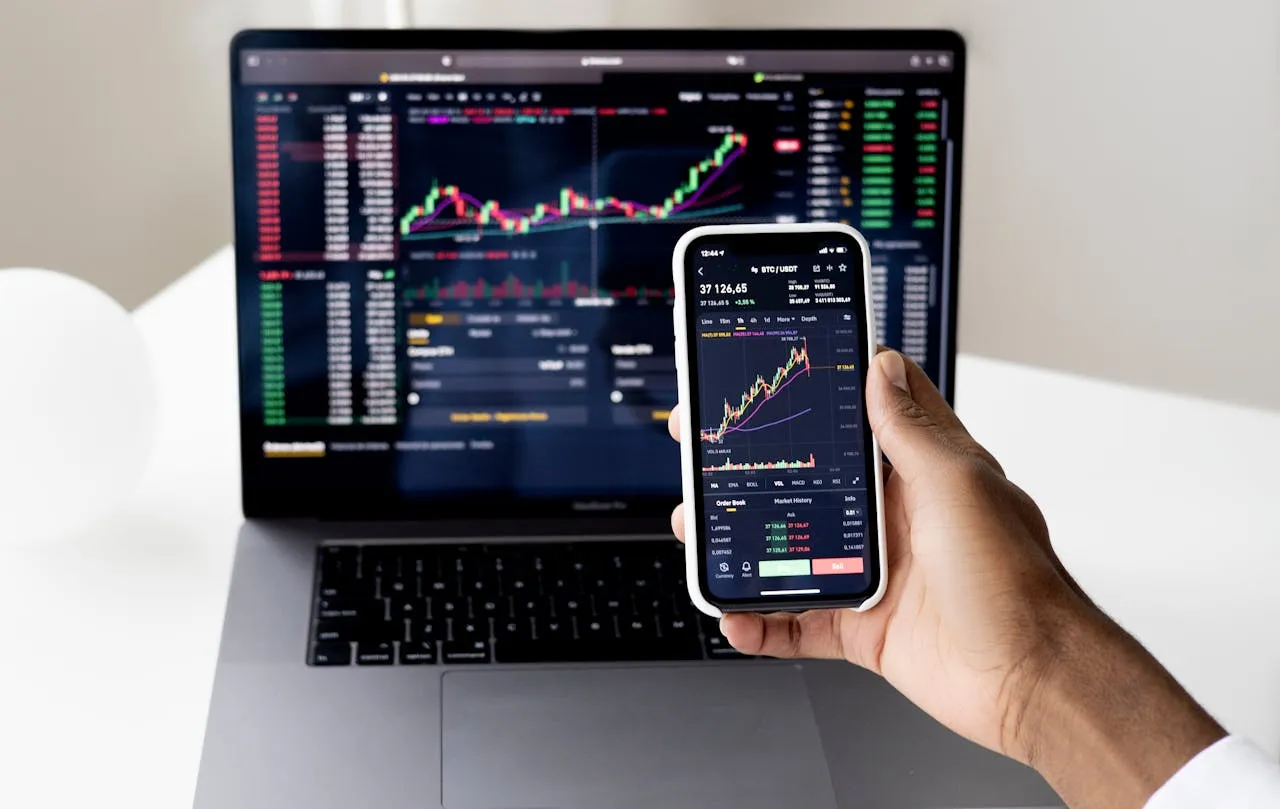
Forex trading (foreign exchange) is the buying and selling of currencies to profit from changes in exchange rates. It’s the largest financial market in the world, with over $7 trillion traded daily. When you trade forex, you’re always trading one currency against another in pairs like EUR/USD (euro vs. US dollar) or GBP/JPY (British pound vs. Japanese yen). If you think the euro will strengthen against the dollar, you buy EUR/USD. If you’re right, you profit.
How Forex Trading Works
Every forex trade involves a currency pair. The first currency is the “base” and the second is the “quote.” When you see EUR/USD at 1.0850, it means one euro costs 1.0850 US dollars.
Going long (buying): You buy EUR/USD if you believe the euro will strengthen. If it moves from 1.0850 to 1.0900, you’ve made 50 pips of profit.
Going short (selling): You sell EUR/USD if you believe the euro will weaken. If it drops from 1.0850 to 1.0800, you’ve made 50 pips of profit.
The forex market operates through a decentralized network of banks, brokers, and electronic platforms. There’s no single exchange like the NYSE. Prices can vary slightly between brokers, which is why choosing a regulated broker matters.
Trading happens 24 hours a day, five days a week, across three major sessions: Asian (Tokyo), European (London), and American (New York). The London and New York overlap (8:00 AM to 12:00 PM Eastern) is the most active period with the tightest spreads and best liquidity.
Key Forex Concepts for Beginners
Pips: The smallest standard price move in forex. For most pairs, one pip equals 0.0001. A 50-pip move on EUR/USD is a move from 1.0850 to 1.0900. Learn more in our detailed pip guide.
Lot size: A standard lot is 100,000 units of the base currency. Mini lots are 10,000, and micro lots are 1,000. Beginners should start with micro lots to keep risk manageable.
Leverage: Forex brokers offer leverage up to 50:1 in the US and higher internationally. This means $1,000 in your account can control a $50,000 position. Leverage magnifies both profits and losses, so it demands strict risk management.
Spread: The difference between the bid and ask price. This is effectively your transaction cost. Major pairs like EUR/USD typically have spreads of 0.5 to 1.5 pips. Exotic pairs have much wider spreads.
Getting Started with Forex
- Choose a regulated broker. In the US, look for brokers regulated by the NFA/CFTC. Outside the US, FCA (UK) and ASIC (Australia) are reputable regulators.
- Open a demo account. Practice with virtual money using MetaTrader 4 or 5. Most brokers offer free demo accounts with live price feeds.
- Start with major pairs. EUR/USD, GBP/USD, and USD/JPY have the tightest spreads and most predictable behavior.
- Learn technical analysis. Forex responds well to support and resistance, moving averages, and price action patterns.
- Use micro lots. Risk no more than 1% of your account per trade while learning.
Visit our education hub for structured forex lessons and strategy guides.
Key Takeaways
- Forex is the world’s largest market, trading $7+ trillion daily in currency pairs
- You profit by correctly predicting which currency in a pair will strengthen or weaken
- Leverage up to 50:1 (US) amplifies gains and losses, making risk management essential
- Start with major pairs (EUR/USD, GBP/USD) and micro lots to keep risk low
- The market is open 24/5, with the London-New York overlap being the most active period
Frequently Asked Questions
How much money do I need to start forex trading? Many brokers allow you to open an account with $50 to $200. However, $500 to $1,000 gives you enough room to practice proper position sizing and risk management with micro lots.
Is forex trading risky? Yes. The high leverage available in forex means small price moves can create large gains or losses. Without proper risk management and a tested strategy, you can lose your entire deposit quickly.
What’s the best time to trade forex? The London-New York overlap (8:00 AM to 12:00 PM Eastern) generally offers the best combination of volume, volatility, and tight spreads for most major pairs.
Risk Disclaimer: Trading involves substantial risk of loss. Past performance is not indicative of future results. See our full risk disclaimer.