
What Is a Spread in Trading? Bid, Ask, and Why It Matters
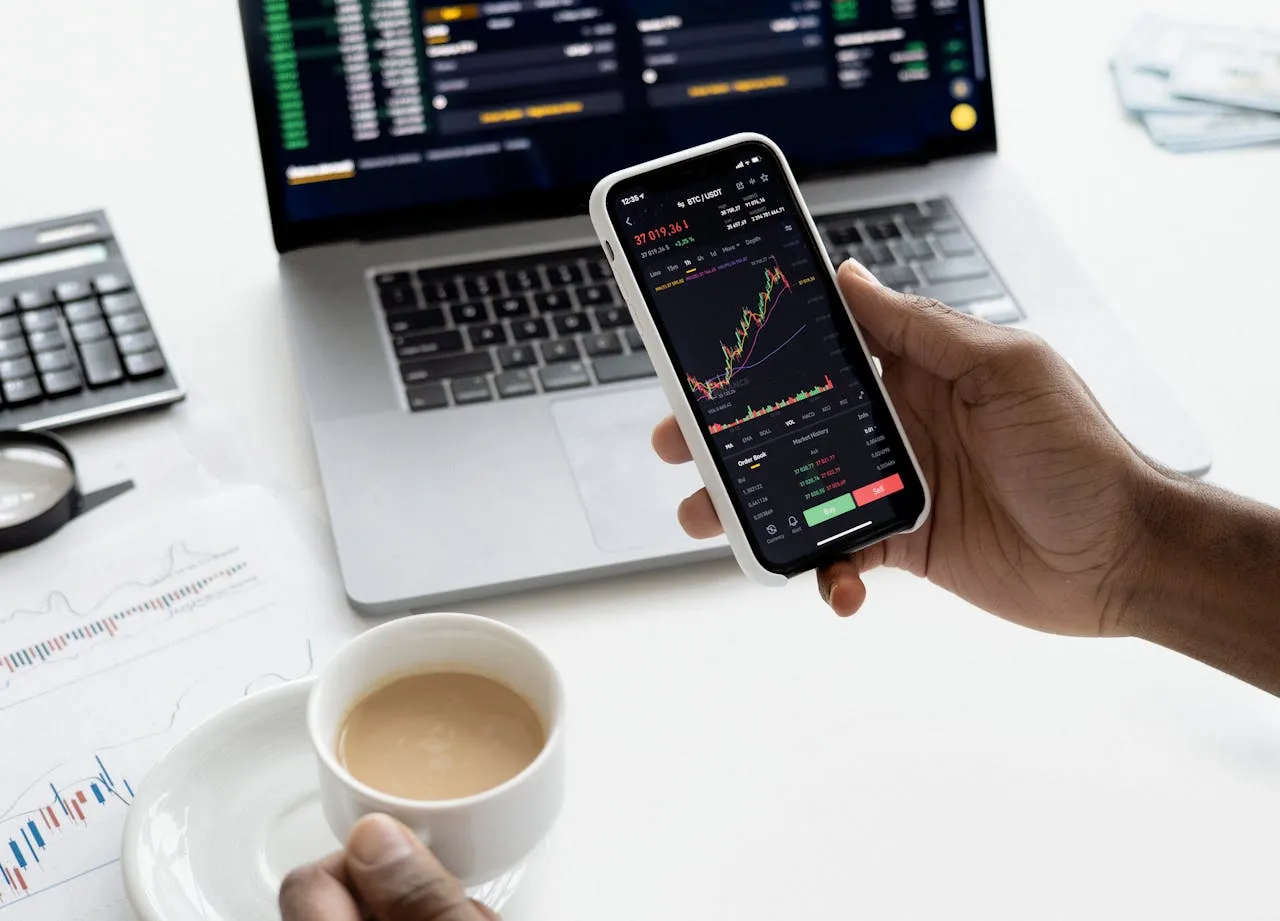
The spread in trading is the difference between the bid price (what buyers will pay) and the ask price (what sellers want). If a stock’s bid is $50.00 and the ask is $50.02, the spread is $0.02, or 2 cents. Every time you enter a trade, you’re effectively paying the spread as a cost. Understanding spreads helps you choose better instruments, time your entries, and accurately calculate your real trading costs.
How the Bid-Ask Spread Works
When you buy a stock or any financial instrument, you pay the ask price (the higher number). When you sell, you receive the bid price (the lower number). This means the moment you enter a trade, you’re already slightly in the red by the amount of the spread.
Example: You buy 100 shares of a stock at the ask price of $50.02. If you immediately turned around and sold, you’d receive the bid of $50.00. That $0.02 difference across 100 shares is a $2 loss, before commissions. The stock needs to move at least $0.02 in your favor just to break even.
For forex traders, spreads are measured in pips. EUR/USD might have a spread of 1.0 pip, meaning you need the pair to move 1 pip in your favor before you’re at breakeven. In futures, spreads are measured in ticks.
What Affects Spread Size
Liquidity. Heavily traded instruments have tight spreads. Apple stock might have a 1-cent spread. A small-cap stock with low volume might have a 10 to 50-cent spread. EUR/USD has a 0.5 to 1.5 pip spread. An exotic forex pair might have 5 to 20 pips.
Volatility. Spreads widen during volatile periods. During a major news release (like the Federal Reserve interest rate decision), spreads can temporarily expand to 5 to 10 times their normal size. This is when slippage becomes a real cost.
Time of day. Stock spreads are tightest during regular market hours (9:30 AM to 4:00 PM Eastern) and wider during pre-market and after-hours sessions. Forex spreads are tightest during the London-New York overlap and wider during the Asian session for USD pairs.
Broker type. Some forex brokers add a markup to the spread as their revenue model (instead of charging a commission). Others charge a small commission but pass through the raw market spread, which is often cheaper for active traders.
Why Spreads Matter for Your Strategy
Spreads are a hidden tax on every trade. If you’re a scalper making 20 trades a day and targeting 5-pip profits in forex with a 1.5-pip spread, you’re giving up 30% of your potential profit to spreads alone. Over hundreds of trades, this adds up massively.
Tips to minimize spread impact:
- Trade liquid instruments. Stick to major forex pairs, large-cap stocks, and popular futures contracts.
- Avoid news events. Spreads spike around major economic releases. Wait for them to normalize.
- Trade during peak hours. Liquidity is highest and spreads are tightest when the most participants are active.
- Use limit orders. Instead of paying the ask (market order), place a limit order at or near the bid to reduce your effective spread cost.
- Factor spreads into your risk-reward ratio. If your target is 10 pips and the spread is 2 pips, your effective target is really 8 pips.
Learn more about order types and execution in our education section.
Key Takeaways
- The spread is the cost you pay to enter every trade: the difference between bid and ask prices
- Liquid instruments (major stocks, EUR/USD, ES futures) have the tightest spreads
- Spreads widen during volatile periods, news events, and off-peak trading hours
- Scalpers and high-frequency traders are most affected by spread costs
- Use limit orders and trade during peak liquidity hours to minimize spread impact
Frequently Asked Questions
Is a smaller spread always better? Generally, yes. Tighter spreads mean lower transaction costs. However, some very tight-spread instruments (like micro-cap stocks with temporary narrow spreads) may have low volume, making it hard to enter and exit larger positions.
Do I pay the spread on every trade? Yes. You pay the spread when entering and effectively when exiting, since you always buy at the ask and sell at the bid. For a round-trip trade, the spread cost applies to the entry side.
What’s a normal spread for stocks? Large-cap stocks like Apple, Microsoft, and Amazon typically have 1 to 2-cent spreads during regular hours. Mid-cap stocks might have 3 to 10-cent spreads. Small-cap and penny stocks can have spreads of $0.10 to $1.00 or more.
Risk Disclaimer: Trading involves substantial risk of loss. Past performance is not indicative of future results. See our full risk disclaimer.