
MACD Indicator: A Beginner's Guide to Signals and Setups
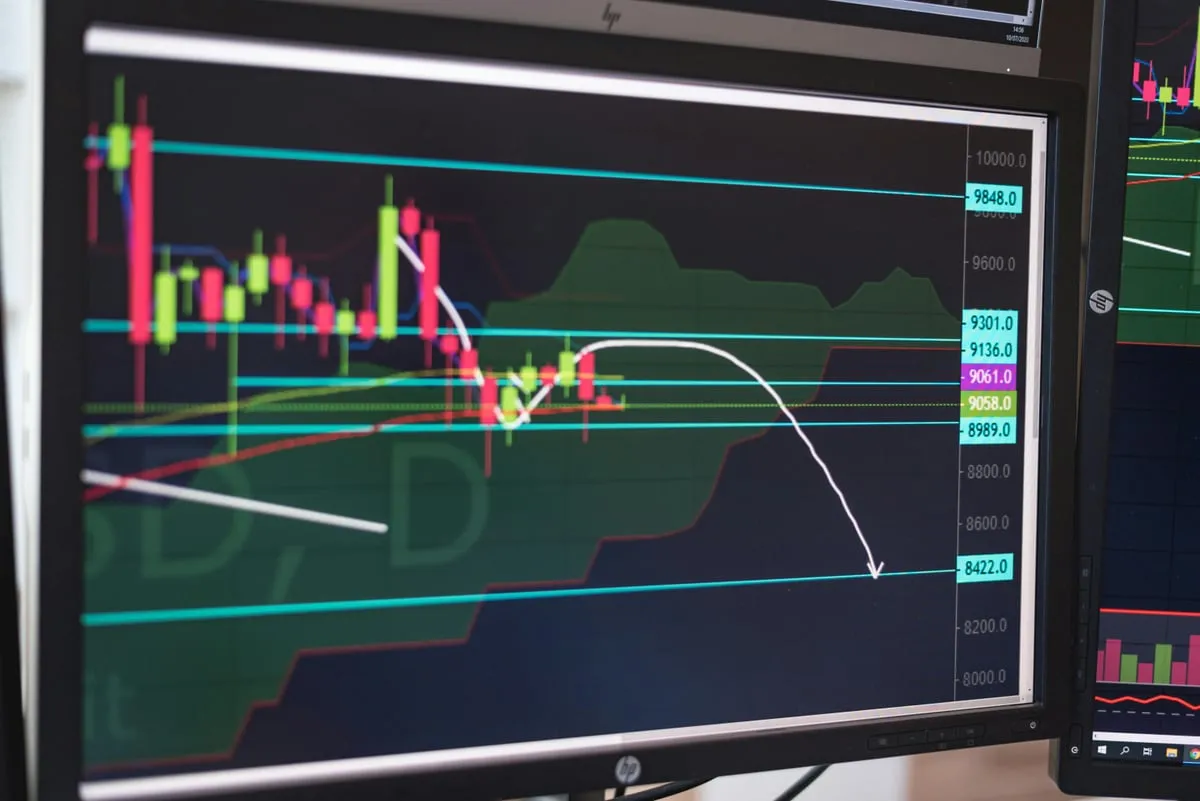
The MACD (Moving Average Convergence Divergence) is a trend-following momentum indicator that shows the relationship between two moving averages. It helps you spot trend changes, measure momentum strength, and time entries. Along with RSI, it’s one of the most widely used indicators in trading.
How MACD Works
MACD consists of three components. The MACD line is the difference between the 12-period EMA and the 26-period EMA. The signal line is a 9-period EMA of the MACD line. The histogram shows the difference between the MACD line and the signal line.
When the MACD line is above zero, the short-term trend is above the long-term trend: bullish. When it’s below zero, the opposite: bearish. The further from zero, the stronger the trend.
You don’t need to calculate any of this yourself. Every charting platform draws MACD automatically. Focus on learning what the three components tell you visually.
Reading MACD Signals
MACD crossover: When the MACD line crosses above the signal line, it’s a bullish signal. When it crosses below, bearish. This is the most basic MACD signal and the one most beginners learn first.
Zero line crossover: When the MACD line crosses above zero, medium-term momentum has shifted bullish. Below zero, bearish. These signals are slower but more significant than signal line crossovers.
Histogram expansion and contraction: Growing histogram bars mean momentum is increasing. Shrinking bars mean momentum is fading, even if price is still moving in the same direction. Histogram contraction often precedes trend changes.
MACD Divergence
Like RSI, MACD produces its most powerful signals through divergence. When price makes a new high but the MACD histogram makes a lower high, momentum is weakening. This bearish divergence warns that the uptrend may be losing steam.
Bullish divergence occurs when price makes a new low but MACD makes a higher low. Selling pressure is fading, and a reversal may be building.
Divergence works best at key support and resistance levels and on higher timeframes (4-hour and daily). On 1-minute charts, MACD divergence is too noisy to be reliable.
Practical MACD Setups
Trend confirmation: Use MACD above zero to confirm you should be looking for long trades, and below zero for shorts. This keeps you trading with the trend rather than against it.
Pullback entries: In an uptrend, wait for the MACD histogram to pull back toward zero, then enter long when it starts expanding again. You’re buying the dip with momentum confirmation.
Combine with support/resistance: A MACD bullish crossover at a support level gives you two reasons to buy. Multiple confirmations increase your edge. Explore our education resources for more on building multi-factor setups.
MACD Limitations
MACD is a lagging indicator because it’s built from moving averages, which are inherently backward-looking. In choppy, sideways markets, MACD generates frequent false crossover signals.
Don’t use MACD as your only indicator. Pair it with volume analysis, price action, or RSI to filter signals. Many successful traders use MACD to confirm what price action is already telling them, not as a standalone system.
Key Takeaways
- MACD shows the relationship between two moving averages and measures momentum
- Crossovers between the MACD line and signal line generate buy/sell signals
- Divergence between price and MACD is the most reliable signal
- MACD works best in trending markets and lags in sideways conditions
- Always combine MACD with price action and other indicators
Frequently Asked Questions
What are the best MACD settings? The default settings (12, 26, 9) work well for most traders. Some day traders use faster settings like (8, 17, 9) for quicker signals, but this increases false signals too.
Is MACD better than RSI? They measure different things. RSI measures momentum magnitude; MACD measures momentum direction and trend. Many traders use both together for a complete picture.
Can MACD be used for scalping? MACD is generally too slow for scalping on very short timeframes. It works better for swing trading and day trading on 15-minute to daily charts.
Risk Disclaimer: Trading involves substantial risk of loss. Past performance is not indicative of future results. See our full risk disclaimer.