
How to Recover From a Big Trading Loss (Without Revenge Trading)
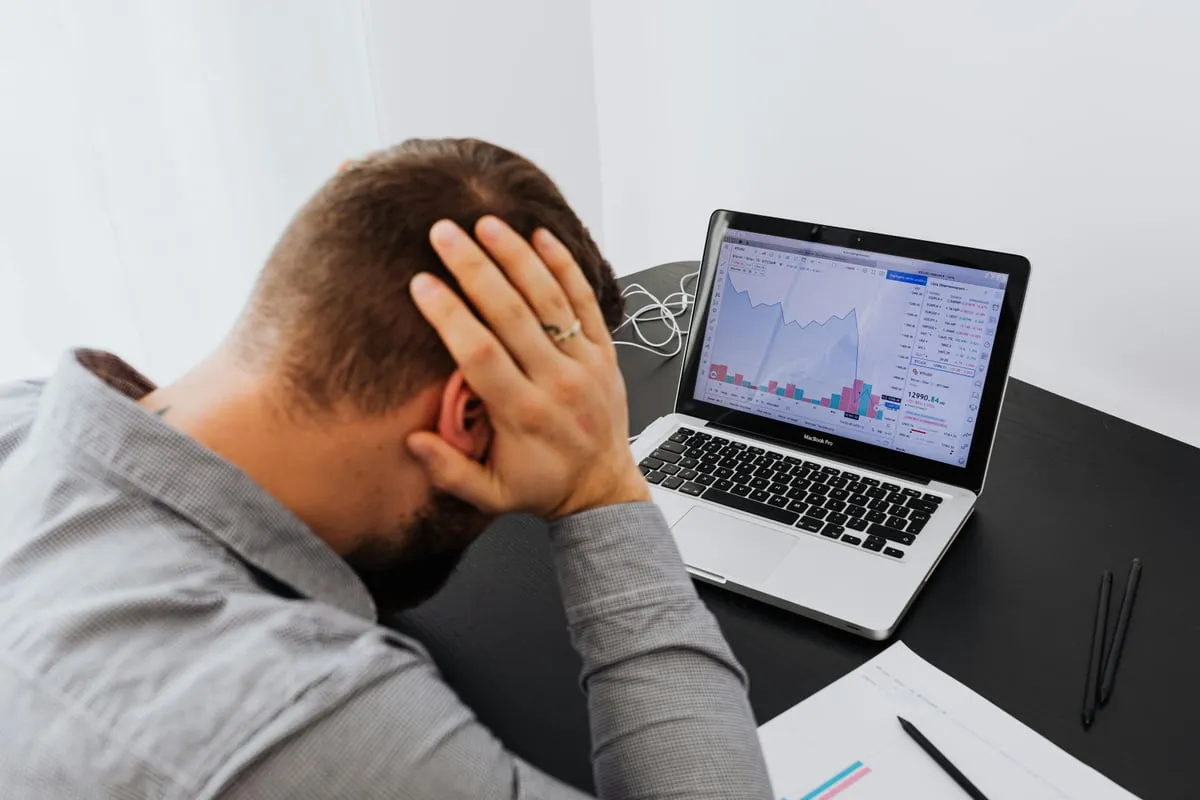
Recovering from a big trading loss starts with stepping away from the screen. Do not place another trade immediately. The biggest danger after a significant loss isn’t the loss itself; it’s the revenge trade that follows. Revenge trading means jumping back in with larger size or reckless entries to “win it back,” and it almost always makes things worse.
Why Revenge Trading Is So Dangerous
After a big loss, your brain enters a state psychologists call “loss aversion on steroids.” You feel the pain of the loss far more intensely than you’d feel the pleasure of an equivalent gain. This emotional state pushes you toward irrational decisions:
- Doubling your position sizing to recover faster
- Ignoring your setup criteria and forcing trades
- Removing or widening your stop loss
- Trading during hours or in markets you normally avoid
Each of these behaviors compounds your original loss. A $500 loss becomes $1,500. A 10% drawdown becomes 30%. The spiral is predictable and preventable.
The Recovery Protocol
Follow these steps after any loss that shakes you emotionally:
Step 1: Walk away. Close your trading platform. The market isn’t going anywhere. Give yourself at least a few hours, ideally a full day. Physical exercise, fresh air, or any activity that gets you out of “trading mode” helps reset your nervous system.
Step 2: Review the trade objectively. Once you’re calm, examine what happened. Was it a valid setup that simply didn’t work? That’s normal. Was it a rule violation? That’s a different problem. Write it down in your trading journal.
Step 3: Reduce your size. When you return, trade at 50% of your normal position size for at least a week. This serves two purposes: it limits further damage while you rebuild confidence, and it reduces the emotional intensity of each trade.
Step 4: Focus on process, not P&L. For the next 10-20 trades, grade yourself on execution quality, not on whether you made money. Did you follow your rules? Did you take valid setups? Did you honor your stops? If yes, the money will follow.
Rebuilding Your Account
The math of recovery demands patience. If you lost 20% of your account, you need a 25% return to get back to even. Trying to do that in a week leads to reckless behavior.
Set realistic weekly targets. Aim for 1-2% per week, not 10%. A steady recovery over 2-3 months is infinitely better than a frantic attempt that leads to another blowup. Read our guide on protecting your trading capital for the foundational rules.
When to Reassess Your Strategy
If big losses are happening repeatedly, the problem might be structural. Ask yourself:
- Is your risk-reward ratio consistently above 1:1?
- Are you risking more than 2% per trade?
- Does your strategy have a proven edge based on backtesting?
Honest answers to these questions tell you whether you need to fix your psychology or fix your system. Sometimes it’s both.
Key Takeaways
- Step away immediately after a big loss to prevent emotional revenge trading
- Reduce position size to 50% for at least a week when returning to the markets
- Review the loss objectively to determine if it was a valid trade or a rule violation
- Set realistic recovery timelines: aim for 1-2% per week, not instant recovery
- If big losses are recurring, reassess your strategy’s edge and risk parameters
Frequently Asked Questions
How long should I wait before trading again after a big loss? At minimum, wait until you feel emotionally neutral about the loss. For most traders, that’s at least one full trading session (overnight). If you still feel angry, anxious, or desperate to recover, you’re not ready.
What counts as a “big” loss? Any loss that significantly impacts your emotional state or exceeds your planned maximum daily loss. For most traders, losing 5% or more of their account in a single day qualifies.
Should I switch strategies after a big loss? Not immediately. Switching strategies after a loss is often another form of emotional reaction. Stick with your current approach, review your risk management rules, and make changes only after a calm, data-driven analysis.
Risk Disclaimer: Trading involves substantial risk of loss. Past performance is not indicative of future results. See our full risk disclaimer.