
Bookmap Review: Heatmap Order Flow for Futures Traders
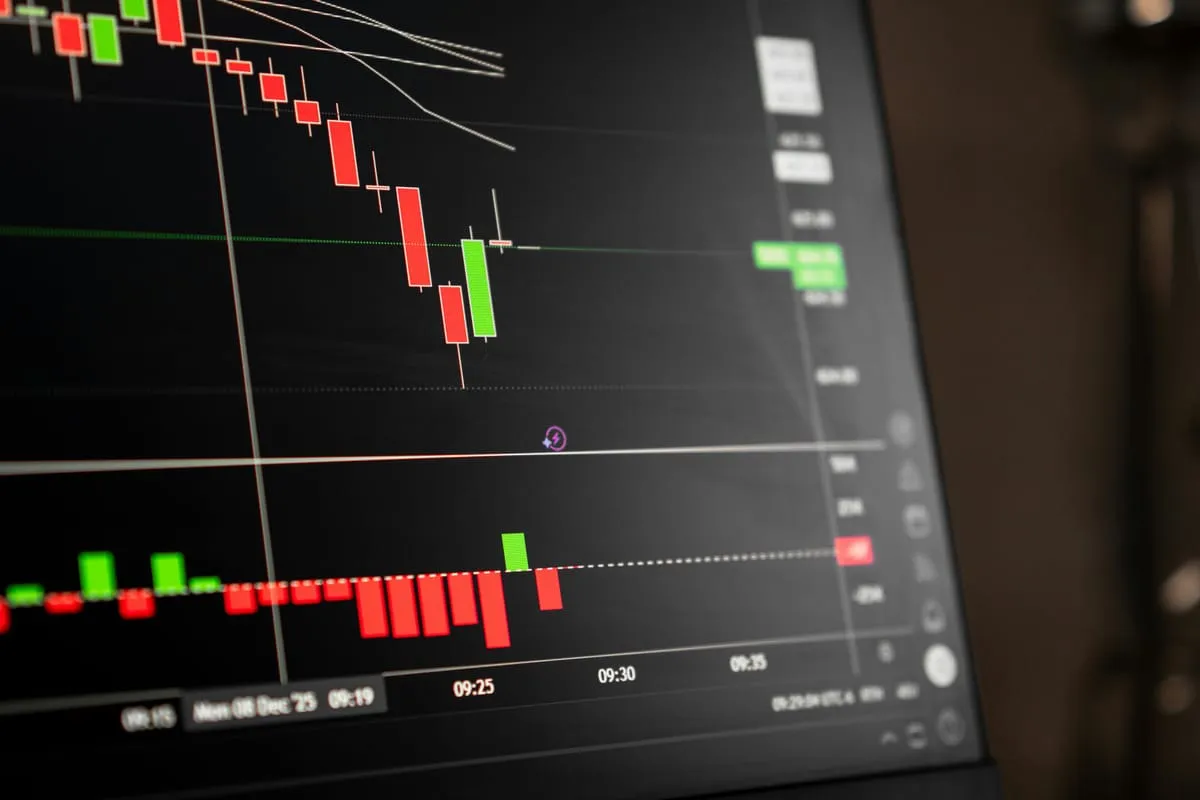
Bookmap does one thing that no other trading platform does: it renders the entire order book as a real-time heatmap at 40 frames per second. Where other platforms show the DOM as a static number ladder, Bookmap shows you the history of liquidity over time, revealing where large orders appeared, where they were pulled, and how price reacted to their presence.
For futures traders who trade based on order book dynamics, liquidity, and institutional activity, Bookmap provides a view of the market that is not available anywhere else. This review covers what it does, how it works, what it costs, and whether it is worth adding to your trading setup.
What Is Bookmap?
Bookmap is a trading platform and visualization tool that specializes in depth-of-market (DOM) heatmap rendering. It takes the standard order book data that every platform receives and renders it as a visual heatmap where:
- Bright colors indicate high liquidity (many resting orders at a price level)
- Fading colors indicate liquidity being pulled or absorbed
- Time scrolls horizontally, showing how liquidity changes over the session
The result is a continuous visual record of where the “walls” of liquidity were, how price interacted with them, and where large orders appeared and disappeared. Standard DOM displays show a snapshot of the current book. Bookmap shows the movie.
Pricing Breakdown
| Plan | Monthly Price | Key Features |
|---|---|---|
| Digital | Free | Basic features, delayed data |
| GLOBAL | $49/mo | Real-time futures data, up to 20 symbols |
| GLOBAL+ | $99-$149/mo | Cross-trading, advanced indicators, more symbols |
Additional market data fees may apply depending on your data feed (Rithmic, CQG, or dxFeed).
The free Digital plan provides delayed data, which is useful for learning the platform but not for live trading. Prop firm traders need at minimum the GLOBAL plan ($49/month) for real-time futures data.
Standout Features
Heatmap Visualization
The heatmap is Bookmap’s core innovation. Every limit order in the book is rendered as a colored pixel on a time-vs-price grid. Over time, this creates visual patterns:
- Solid bright bands at price levels indicate persistent large orders (potential support/resistance)
- Sudden appearance of large orders ahead of price often indicates institutional positioning
- Rapid disappearance of orders (pulling) as price approaches indicates they were not genuine
- Color intensity changes show liquidity building or thinning at specific levels
For NQ and ES futures, where the order book is deep and constantly moving, the heatmap reveals structure that is invisible on a standard DOM display. A 500-lot bid that appeared three minutes ago and has been absorbing selling is visible on Bookmap’s history but invisible on a standard DOM showing only the current state.
Iceberg Order Detection
Iceberg orders are large orders that execute in small visible chunks to disguise their true size. Bookmap detects these by tracking the pattern of repeated fills at the same price level that exceed the visible order size.
This feature is directly relevant for futures traders because institutional participants frequently use icebergs at key levels. Identifying a 2,000-contract iceberg at a specific NQ level changes how you interpret that level’s significance compared to seeing only the 50 contracts visible in the book.
Volume Dots
Volume dots appear on the price ladder showing trade size and intensity at each price level. Larger dots indicate higher volume execution. This visualization complements the heatmap by showing where trades actually occurred, not just where orders rested.
The combination of the heatmap (resting liquidity) and volume dots (executed trades) provides a complete picture of market activity at each price level.
Cumulative Volume Delta (CVD)
CVD tracks the running total of aggressive buying versus aggressive selling. On Bookmap, this is overlaid on the heatmap, showing whether price movement is driven by genuine aggressive order flow or by passive order absorption.
For prop firm traders, CVD helps distinguish between:
- Genuine breakouts (CVD confirms the direction, aggressive orders driving price)
- False breakouts (price moves but CVD diverges, suggesting passive absorption will reverse the move)
Spoofing Detection
Bookmap can identify potential spoofing patterns where large orders are placed and rapidly cancelled to manipulate perceived supply/demand. While spoofing detection is not a trade signal by itself, it helps traders avoid reacting to false liquidity that was never intended to execute.
Multibook
The Multibook feature aggregates data from multiple exchanges simultaneously, providing a combined view of liquidity across markets. For futures traders, this is relevant when correlated instruments on different exchanges affect your primary contract.
How Traders Use Bookmap
Bookmap is typically used in one of two ways:
As a Primary Execution Platform
Some traders execute directly through Bookmap, using the heatmap as their primary chart. This works well for scalpers who trade based on order book dynamics and do not need traditional candlestick chart analysis.
As a Supplementary Analysis Tool
Most traders run Bookmap alongside their primary platform (NinjaTrader, Sierra Chart). They use NinjaTrader for charting, indicator analysis, and order entry, while monitoring Bookmap on a second screen for order flow context and liquidity analysis.
The second approach is more common because Bookmap’s charting capabilities beyond the heatmap are limited compared to dedicated platforms. You get the best of both worlds by using each tool for what it does best.
Data Feed Compatibility
Bookmap connects to:
- Rithmic (MBO data for the deepest order book resolution)
- CQG (MBP data, good but less granular)
- dxFeed (affordable data option)
For the best heatmap experience with futures, Rithmic’s Market By Order (MBO) data provides individual order visibility that makes the heatmap more detailed. CQG’s Market By Price (MBP) data works but shows aggregate volumes rather than individual orders.
For more on data feed selection, read our Rithmic vs. CQG comparison.
The Pros
- Unique heatmap visualization that is not available on any other platform
- Iceberg order detection reveals hidden institutional activity
- Historical liquidity display shows order book changes over time, not just the current state
- Spoofing detection helps avoid reacting to manipulative orders
- Free tier available for learning the platform with delayed data
- Connects to Rithmic and CQG, covering most prop firm data feeds
The Cons
- $49/month minimum for real-time futures data, plus potential data feed fees
- Additional cost on top of your primary platform (most traders use Bookmap alongside NinjaTrader)
- Learning curve for interpreting the heatmap effectively
- Not a complete trading platform for most traders; limited charting beyond the heatmap
- Screen real estate requirement: the heatmap needs a large display to be readable
- Information overload risk: new users can see too much data and struggle to extract actionable signals
Who Is Bookmap Best For?
- Scalpers and short-term traders who trade based on order book dynamics and liquidity
- Order flow traders who want to see where institutional participants are positioning
- DOM traders who have outgrown the standard number ladder and want visual context
- Traders who use iceberg and absorption patterns as part of their trading methodology
Who Should Look Elsewhere?
- Chart-based discretionary traders who make decisions from candlestick patterns and indicators: traditional platforms serve you better
- Swing traders who hold for hours or days: the order book dynamics Bookmap reveals are relevant on shorter timeframes
- Budget-constrained traders: adding $49/month on top of your platform and data feed subscriptions adds up
- Beginners: the information density of the heatmap is overwhelming without a solid foundation in market microstructure
Verdict
Bookmap is a specialized tool that provides a genuinely unique view of the futures market. The heatmap visualization, iceberg detection, and historical liquidity display are capabilities that no other platform replicates. For traders whose edge comes from reading the order book, Bookmap delivers information that improves decision-making.
The cost ($49+/month) and the fact that most traders need it alongside a separate execution platform make it a premium addition to an already expensive trading stack. It is not a necessity; it is a competitive advantage for a specific type of trader.
If order flow and DOM reading are central to your strategy, Bookmap is worth the investment. If you trade from charts and indicators, the money is better spent elsewhere. Try the free Digital tier with delayed data to learn the interface before committing to a paid plan.
For alternative order flow platforms, see ATAS (deepest footprint analysis) and Sierra Chart (built-in order flow tools with best performance).
Key Takeaways
- Bookmap provides a unique heatmap visualization of the order book that no other platform replicates, showing historical and real-time liquidity in a visual format
- The platform detects iceberg orders (large hidden orders) and displays absorption patterns that reveal institutional activity invisible on standard platforms
- Real-time futures data requires the GLOBAL plan ($49/month minimum); the free Digital tier with delayed data is useful only for learning the interface
- Most traders need Bookmap alongside a separate execution platform (NinjaTrader, Sierra Chart), adding to the total cost of the trading stack
- Bookmap is best for scalpers and order flow traders who build their edge on reading the DOM; chart-based discretionary traders will not benefit
Frequently Asked Questions
Can Bookmap replace NinjaTrader or my primary trading platform?
For some scalpers who trade purely from the order book, yes. For most traders, no. Bookmap’s strength is the heatmap visualization, not traditional charting. Most traders run Bookmap alongside their primary platform: NinjaTrader for charting and execution, Bookmap for order flow context on a second screen.
Is the free version of Bookmap useful?
The free Digital tier provides delayed data and basic features. It is useful for learning the interface and understanding how to read the heatmap, but not for live trading decisions. Think of it as a training mode. Real-time futures data requires the GLOBAL plan ($49/month) at minimum.
What data feed works best with Bookmap?
Rithmic provides Market By Order (MBO) data, which gives Bookmap the most granular order book information. The heatmap is more detailed with MBO data because it shows individual orders rather than aggregates. CQG and dxFeed work but provide less resolution. For most prop firm traders using Rithmic-based firms, this is already your data feed.
How long does it take to learn Bookmap effectively?
Expect 2-4 weeks of daily use before you can read the heatmap intuitively. The initial learning curve involves understanding what the colors mean, recognizing liquidity patterns, and distinguishing genuine signals from noise. Bookmap provides tutorial videos and a learning section on their website. Watching experienced traders use Bookmap (YouTube, NexusFi forums) accelerates the learning process.
Is Bookmap useful for NQ/MNQ trading specifically?
Yes. NQ and ES are among the most actively traded futures contracts, which means the order book is deep and the heatmap is information-rich. The liquidity patterns, iceberg activity, and order flow dynamics visible on Bookmap are particularly clear on high-volume instruments like NQ. Lower-volume contracts produce less heatmap data and the tool is less valuable.